
Jumba La Mtwana Tour
Jumba la Mtwana Ruins
“The large house of the slave”
Jumba La Mtwana Tour in Mombasa offers a fascinating journey into ancient Swahili history, exploring the ruins of a 14th-17th century trading town, featuring coral stone architecture, mosques, houses, and a tomb, all set by the Indian Ocean, perfect for history lovers seeking quiet, culturally rich exploration away from typical beach crowds.
You can get there via tuk-tuk or local matatu/piki-piki from Mombasa/Mtwapa, with a small museum on-site, and enjoy the relaxing beach nearby.
Location:
Jumba La Mtwana is a picturesque, ruined village situated in Kilifi County on the Kenya Coast.
The site lies some 15 kilometers north of Mombasa on and above the beach some 1000 meters north of the mouth of Mtwapa creek.
Jumba La Mtwana Tour
Jumba La Mtwana Tour
It is 4 kilometers from the Mombasa-Malindi Highway and extends along the shore for a distance of about 300 meters and 250 meters inland.
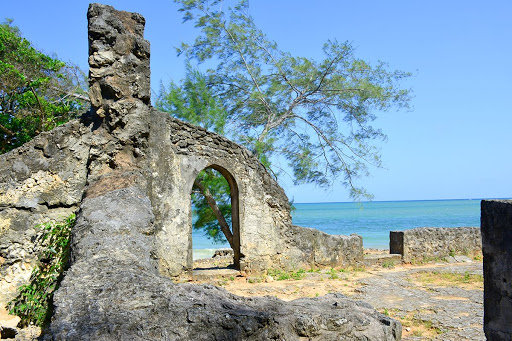
It features a small historical Swahili town that was deserted about 500 years ago.
Excavation of the site began in 1972, and ten years later the site was recognized as a National Monument.
Evidence found within the rural metropolis indicates that it started out around the 14th century and chosen for the proximity to fresh water.
It also had fresh ocean breezes and strategic position to avoid attack from the water.
The name Jumba la Mtwana is a Swahili word meaning the manson of slave trade.
From its few standing rusty walls, the place was an Arab town.
Some of the attractions include the palace, gents mosque, ladies mosque, courts, and a well among others.
Jumba La Mtwana Tour
Jumba La Mtwana Tour
The presence of the mosques signifies that the village was once inhabited by Muslims.
The full name Jumba la Mtwana means in Swahili “the large house of the slave”
Within this area four mosques, a tomb and four houses have survived in recognizable condition.
These houses include the House of the Cylinder, The House of the Kitchen,
The House of the Many Pools, which had three phases, and the Great Mosque.
The inhabitants of this town were mainly Muslims as evidence by a number of ruined mosques.
Facts on Jumba la Mtwana:
- A national monument which dates back the 14th century near Mtwapa town.
- From its few standing rusty walls the place it was certainly an Arab town.
- Its attractions include the palace, gents mosque, ladies mosque, courts and a well.
- According to archeologists some of the available broken crockery and other ceramic evidence depicts that the town was abandoned in the late 15th century.
The full name Jumba la Mtwana means in Swahili “the large house of the slave”. Within this area four mosques, a tomb and four houses have survived in recognizable condition.
These houses include the House of the Cylinder, The House of the Kitchen, The House of the Many Pools, which had three phases, and the Great Mosque.
The inhabitants of this town were mainly Muslims as evidenced by a number of ruined mosques.
Jumba la Mtwana a picturesque ruined village is situated in Kilifi along the Kenyan coast.
The site lies some 15 kilometers north of Mombasa on and above the beach some 1000 meters north of the mouth of Mtwapa creek; 4 kilometers from the Mombasa-Malindi road and extends along the shore for a distance of about 300 meters and 250 meters inland.
Jumba la Mtwana Ruins